


Symphony of the Cells
1.314.00 Reviews
App Specs
- Version
- 3.1.4
- Updated On
- License
- Free
- Downloads
- 10,000+
- Developer
- Truman Global LLC
- Categories
- Medical
- Platform
- Android
Screenshots

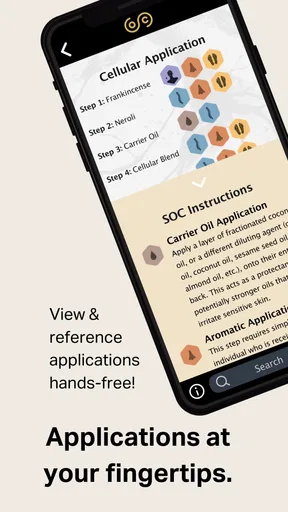
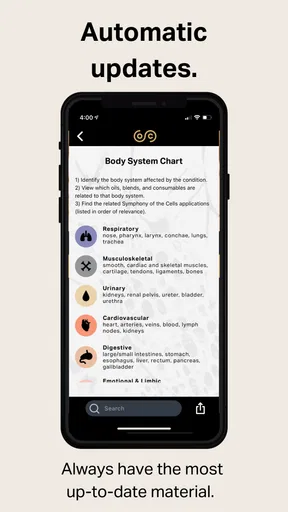
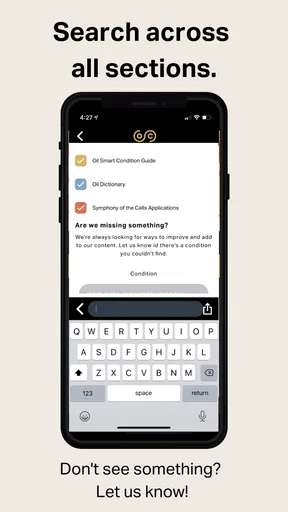
 Analysis by AppCompare
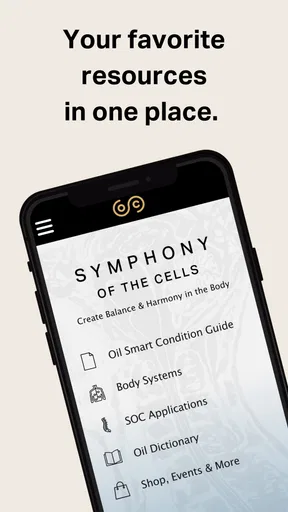
I approached Symphony of the Cells as a medical reference app rather than a general wellness tracker. Its central idea is straightforward: help users cross-reference remedies with their preferred SOC applications. That makes it appealing to people already familiar with Symphony of the Cells routines, especially those who want a compact reference while planning a session instead of searching through printed notes or scattered online material.
My first impression was that the app has a very specific audience. It is not trying to be a diagnostic tool, a symptom diary, a telehealth service, or a replacement for a qualified medical professional. It is a companion for people who already use or study a particular remedy-based approach. If that description fits you, the focused design can feel useful quickly. If it does not, the app may seem narrow almost immediately.
The first-week appeal comes from focused cross-referencing
The strongest reason to try the app is convenience. When I am working with a reference system that connects remedies and applications, the annoying part is often not learning one item; it is checking how several pieces relate to each other. A dedicated cross-reference tool can reduce that friction by putting the relevant information in one place. That is more practical than repeatedly switching between notes, books, browser tabs, and memory.
I would expect the first week to be the most satisfying period for a curious new user. The app gives a clear reason to open it: look up a remedy, compare it with a favorite SOC application, and decide whether the combination belongs in a personal routine. That focused loop is easier to understand than a broad health app filled with unrelated dashboards.
One useful way to test it is to begin with a familiar application instead of trying to explore everything at once. Choose a routine you already understand, then use the cross-reference function to examine related remedies. This makes it easier to judge whether the organization helps you think more clearly or merely duplicates information you already keep elsewhere.
The app is free to install, which lowers the barrier to that trial. It is rated for Everyone, so the presentation is not positioned as an age-restricted product. However, free access does not necessarily mean the complete experience has no cost: in-app purchases range from $4.99 to $29.99 per item. I would therefore explore the useful parts first and avoid paying until I know the reference material fits my needs.
The first-week experience also depends heavily on your expectations. Someone looking for explanations of conventional treatments, evidence summaries, appointment preparation, or medication reminders will probably find the concept too limited. Someone already using SOC material may appreciate that the app stays on topic. That difference matters more here than the download decision itself.
Worth Reading Before You Choose

Flipboard Shows What News Apps Must Do Beyond the Feed

Switching to Android Auto Means Rethinking Your Driving Routine

Google Calendar Makes a Crowded Week Easier to Manage

Ludo King Makes the Most of the Minutes Between Plans

Baby Panda World Brings Quick Play to Modern Phones, but Its Game Library Feels Busy

ESPN’s Live Game View Makes Following Close Games Easier
What makes the app useful in a real routine
A realistic use case would be a practitioner or home user preparing for a familiar session. Instead of relying on memory, I would open the app before starting, check the relevant application, review the associated remedy references, and write down any choices in a separate personal record. The app can support the preparation stage without pretending to manage the entire health situation.
That separation is important. I would not treat a cross-reference as proof that a remedy is appropriate for a symptom, nor would I use it to delay professional care. The useful question is, “Does this help me organize the approach I already follow?” The unsafe question is, “Can this decide what medical treatment I need?” The app is much better suited to the first question.
A second practical workflow is comparison over time. Rather than opening the app only when something feels wrong, I would use it while building a small personal reference notebook. For each application, I could record the remedy references that repeatedly matter to me, along with questions to discuss with a qualified professional. This turns a lookup tool into a structured study aid, although the notebook itself would still be needed because the app should not be treated as a complete personal medical record.
A less obvious advantage of this approach is that it can expose gaps in one’s understanding. If I keep returning to the same application but cannot explain why a particular remedy appears relevant, that is a signal to pause and learn more rather than automatically repeat the routine. Used thoughtfully, the app can encourage better questions. Used mechanically, it can encourage overconfidence.
Month-to-month value depends on whether your practice changes
The long-term value is not as automatic as the first-week appeal. A cross-reference app earns a lasting place only if it continues to save time, support learning, or help maintain a consistent routine. If I already know my preferred applications and keep the same small set of notes, I may stop opening it after the initial exploration.
For an active student or practitioner, the situation is different. New cases, changing study topics, or a growing collection of remedies can create recurring reasons to consult the app. Its value then comes from being a repeatable reference point rather than a one-time novelty. The more often I need to compare options, the more likely the app is to justify its place on my phone.
I would judge month-to-month usefulness by three questions. Does it shorten a lookup that I perform regularly? Does it help me notice relationships I would otherwise miss? Does it make my personal process more organized without adding another chore? If the answer is yes to at least two, continued use makes sense. If the answer is no, a paper index or a carefully maintained note may be more efficient.
The developer, Truman Global LLC, has kept the product centered on the SOC concept rather than turning it into a broad lifestyle platform. That focus is helpful for the intended audience, but it also limits how widely the app can remain relevant. A general health app may offer more recurring functions for everyday users, while this one depends on continued interest in a particular reference method.
The current version is 3.1.4, and the app has passed 10K installs. Those figures suggest that it has found a real audience, but they do not by themselves tell me whether it will become part of a durable routine. The very low average rating, 1.3 from roughly 70 ratings, is a reason to be cautious before paying for anything. I would read that signal as a prompt to test the workflow carefully, not as a reason to assume the concept has no value.
The maintenance burden is small, but not invisible
Unlike a fitness tracker or symptom journal, this app does not appear to demand daily data entry as its central purpose. That is a genuine advantage for anyone who dislikes maintaining another streak. I can open it when I need a reference and close it when I do not. There is less pressure to turn my health routine into a constant reporting task.
Still, the app creates a different kind of maintenance burden: keeping my interpretation disciplined. A reference can become outdated in my mind even when the screen has not changed. I need to remember which information is a traditional or complementary framework, which decisions require professional advice, and which personal observations are only personal observations. No lookup tool can perform that judgment for me.
My recommended maintenance routine would be deliberately light. I would review the app when studying a new application, keep a separate dated note for questions and observations, and periodically remove assumptions that I cannot support. I would also avoid building a large private catalogue of remedies without a clear purpose. More saved information is not automatically better information.
The purchase model adds another maintenance question. Because individual in-app items cost between $4.99 and $29.99, I would treat each purchase as a separate decision rather than assuming the free download includes everything I might want. Before buying, I would identify the exact gap it fills: a missing reference, a more convenient workflow, or material I expect to consult repeatedly. If I cannot name that benefit, I would keep using the free portion or skip the purchase.
The minimum operating-system requirement is Android 7.0 or newer. For many Android users that is not a serious obstacle, but anyone using an older device should check compatibility before planning around the app. On iOS, I would likewise confirm the current store requirements before installing, since operating-system support can affect whether a long-term reference remains usable on a particular phone.
Where fatigue begins after the novelty fades
The biggest source of fatigue is repetition without expanding usefulness. If every visit consists of the same small set of lookups, the app can start to feel like a digital card index that I could replace with a note. That is not necessarily a flaw in the design; it is a mismatch between a specialized tool and a user whose needs are already settled.
Another fatigue point is the risk of treating cross-references as recommendations. The faster an app makes associations visible, the easier it is to skip the slower work of asking whether the association applies to a particular person. I would be especially careful with children, pregnancy, chronic conditions, allergies, prescribed medicines, and urgent symptoms. The Everyone content rating describes the audience classification, not a guarantee that every remedy or application is suitable for every person.
The low rating also affects confidence. Even if the core idea is useful, a score of 1.3 can make me hesitate about depending on the app for important information. I would not use it as my only reference, and I would keep a backup source for anything I consult regularly. That backup could be a trusted book, professional guidance, or personal notes—not simply another unverified page.
There is also a financial fatigue risk. A free app is easy to try, but several separate purchases can change the value calculation. For an occasional user, even a modest purchase may not pay off in saved time. For a practitioner who consults the material repeatedly, the same purchase may be reasonable. The right decision depends on frequency and reliability, not on the initial download price.
Finally, users who expect modern health-app conveniences may feel disappointed. This is not the right choice if I want appointment booking, medication schedules, emergency guidance, wearable integration, or a broad symptom-management system. A conventional medical reference or a clinician-led service is better for those jobs. Symphony of the Cells makes more sense as a narrow companion than as the main health app on my phone.
Who should keep it, and who should move on
I can recommend trying it to people who already recognize the SOC framework and want a dedicated way to cross-reference remedies with applications. It may also suit students who are still learning the relationships and want a portable starting point for organizing study. The best candidates are patient enough to verify what they read and realistic about the app’s role.
I would not recommend making it a first choice for someone unfamiliar with complementary remedy systems. Without that background, the app may provide associations without enough context to interpret them responsibly. A well-reviewed introductory resource, direct instruction from a qualified practitioner, or a conventional medical reference would be a safer starting point depending on the question.
I would also skip paid content until the free experience proves that the lookup process fits my habits. The combination of optional purchases and the very low user rating makes a cautious trial particularly sensible. Downloading it is a low-commitment experiment; building a treatment decision around it is not.
One practical tip is to use it before, not during, a session. Preparing the questions and references first reduces the temptation to make impulsive choices while focused on the person or situation in front of me. Another is to compare its information with an independent source when the decision has meaningful health consequences. A third is to set a personal stopping rule: if the app does not save time after several genuine uses, remove it rather than keeping it out of habit.
My long-term verdict
Symphony of the Cells has a clear and unusual purpose, and that is both its strength and its boundary. I like the idea of a focused cross-reference companion for people who already use SOC applications. The free entry point makes exploration easy, and the lack of a daily tracking obligation keeps the maintenance burden manageable.
However, I would not call it an essential medical app. Its lasting value depends on a specialized routine, careful interpretation, and willingness to work around the limits of a narrow reference tool. The 1.3 average rating from around 70 ratings makes me cautious about reliability and paid expansion, while the 10K-plus install figure shows that there is at least a modest group interested in the concept.
My final recommendation is conditional: try the free experience if the SOC method is already part of your practice, test it against a real lookup workflow, and keep an independent source nearby. Pay only when a specific item solves a recurring problem. For everyone else, especially anyone seeking diagnosis, urgent guidance, medication management, or broad medical education, a different category of app will serve you better.
After the novelty fades, I would keep this app only if it continues to shorten familiar research tasks and helps me maintain a thoughtful, documented routine. That is a reasonable standard for a specialized reference, and in my view it is the only way this particular app earns permanent space on a phone.
Pros
- Clear
- step-by-step guidance for following cell-salt protocols.
- Useful reference for practitioners already familiar with essential oils.
- Compact format makes individual protocols easy to review.
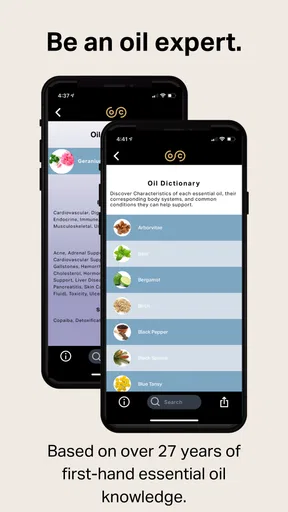
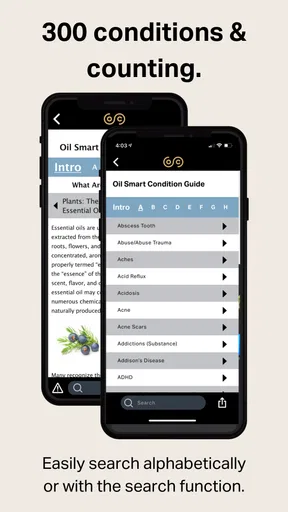
- Searchable content helps locate oils and body-system topics quickly.
- Can support consistent session planning and note-taking.
Cons
- Many recommendations lack strong independent scientific evidence.
- Essential oils may cause allergies
- irritation
- or other adverse reactions.
- The app should not replace professional medical diagnosis or treatment.
- Some content may encourage use of oils without enough safety context.
- Access to the full material may depend on paid content or subscriptions.
FAQs for Symphony of the Cells
What is Symphony of the Cells?
Symphony of the Cells is a wellness and aromatherapy app designed to introduce users to essential-oil-based application protocols. It presents information about different blends, body systems, and suggested routines, making it useful for people who already use essential oils or want a structured way to explore them. The app is primarily educational and should not be treated as a replacement for professional medical care.
What can I do with the Symphony of the Cells app?
The app lets you browse protocols, review recommended essential-oil sequences, and learn how specific routines are traditionally associated with different wellness goals. Depending on the available version and subscription, you may also find instructional content, reference material, saved resources, and guidance for following a protocol. Its value is mainly in organizing information that can otherwise be difficult to find in printed guides or scattered online sources.
Do I need essential oils or special equipment to use Symphony of the Cells?
To get the most from the app, you will generally need access to the essential oils mentioned in the protocols, along with a suitable carrier oil or other recommended application supplies. The app itself does not replace those products. Beginners should read each instruction carefully, use only properly labeled oils, and avoid experimenting with undiluted oils or unfamiliar combinations without understanding safe application practices.
Is Symphony of the Cells safe for everyone?
The information in Symphony of the Cells should be approached with caution because essential oils can cause skin irritation, allergic reactions, photosensitivity, or other problems when used incorrectly. Children, pregnant or breastfeeding users, older adults, and people with medical conditions or medication requirements should consult a qualified healthcare professional before following any protocol. Always perform appropriate safety checks and stop use if an adverse reaction occurs.
Is Symphony of the Cells free to download?
The app may be available to download without an upfront charge, but some content or features can require an in-app purchase, membership, or subscription, depending on the platform and current developer pricing. Before downloading or starting a trial, check the Google Play Store or Apple App Store listing for the latest cost, renewal terms, and included features. Cancel trials through your store account if you do not want them to renew.


